Thoughts
Aphorisms, market notes & half-formed ideas.
 Unbecome
Stay alone. Get bored. Talk to yourself. Write. Discover what you really think when you are the only audience. Constant connectivity is the biggest enemy of original thought. Disconnect. Disappear.
Treat ideas like clothes. Try them. See if they fit. Discard them when they no longer serve the purpose. Separate the ideas from the person. Strip ideas to their core. Reject processed ideas. Consume them raw. Test. Observe. Unlearn. Update.
Let go of biases. Let go of attachments. Let go of the fear of being proven incorrect, being proven stupid, getting isolated. Welcome being wrong. The level of criticism you can take without defending yourself is the degree of your maturity.
Sit with uncertainty. Thinking starts at discomfort. Think. Read. Speak your heart. If you can't say it, you don't understand it. Teaching others is an even better way of learning.
Don't assume conclusions. Don't borrow convictions. Step outside the scene to understand it. Free yourself of concepts that bind you. Separate yourself from the labels that society uses to define you. Do not let your opinions become your identity.
You are not your profession. You are not your money, not your country, not your religion, not your family name. You are neither the story you keep telling yourself nor the version of you that society wants you to be.
Strip it all away. Your beliefs. Your past. Your trauma. Your achievements.
Strip it all away and ask what remains.
That. That remainder. That which quietly watches all of it come and go without becoming any of it.
That's worth knowing.
But it's highly unlikely that you'll ever get there. Not because it's hidden. But because the stripping away is uncomfortable. And society keeps handing you new things to wear.
 Sprint
Kabhi kabhi mujhe lagta hai ki sar par ek junoon sawaar ho, only then can one live his life to the fullest.
Everything becomes easy then, from waking up early to showing up daily & putting in that extra effort to create what once seemed impossible. Then everything else in life seems like a distraction; friends, family, profession, even health. The mind is consumed by one purpose, one mission, one focus. Jaise wo Arjun jise keval machhli ki aankh dikhai deti thi.
Ultimately, there seems to be no meaning or purpose of anything in life. But such phases of passionate creation are what produce the greatest achievements of one's inconsequential life; the student who came first, the athlete who won gold, the author who wrote the bestseller.
Every moment, every day, every year that passed unnoticed was when you were not consumed by the desire to create, to achieve, to excel. I agree that you cannot operate at 100% capacity all your life, but there come times when you do, & those are the times to look back upon, smile, & close your eyes. You did well.
Jab zindagi ki worthlessness ko aap truly accept karte hain, then only can you make some parts of it truly worthy.
So get up, sit straight, sprint if you have to.
Abhi time hai aapke paas.
 Anti-FOMO manifesto
Bookmark this anti-FOMO manifesto that I'm giving you for free & read it every morning till the last trading day of your life.
- I have made peace with the fact that I have neither the capacity nor the need to capture every upmove in the market.
- I like to trade only proper constructive setups, & not enter here-&-there in the name of what kind of structures are trending currently.
- If the stock goes up without giving me a tradable setup, let it go; it was never mine in the first place.
- I will allow myself to feel FOMO only when I actually miss a setup that met my tradability criteria, either due to a deficiency in my scanning or in my execution. The result is immaterial. Even if the stock had later hit my stoploss, and it was a setup worth trading (under appropriate market conditions), it was a miss on my part.
- I don't care what this world thinks about me, because I don't think anything about it. I judge myself not by the quantum of money I earned, but whether my approach was process-driven or not.
 Squished
An ant was walking through a forest when it started to rain heavily.
The ant exclaimed, "Oh God! Please save me from this rain."
The ant was unaware of an elephant approaching gently from behind. Compared to the ant, it was so huge that neither the ant nor the elephant was aware of the other's existence.
As the elephant moved forward, its enormous body shielded the ant from the rain. The ant, filled with gratitude, said, "Thank you, God, for saving me from the rain."
The next moment, as the elephant moved further forward, its foot accidentally stepped on the ant, flattening it to a pulp.
End of story.
'Higher' entities (markets, gods, governments, nature) are like elephants, while you are the ant that goes unrecognized, existing only in anonymity and risk. These impersonal forces that can shape (and crush) your lives remain oblivious to your existence, and most are quite capable of cutting you out.
So there's no need to be thankful to, pray to, or fear them. Don't expect the elephant to know you're there; it doesn't. All the credit and all the criticism are solely yours. Do what you need to do and get out of there safely.
Just don't get squished!
 At the end of the day
At the end of the day, aap khud ko hi payenge.
You can give the credit to trading, to a sport, to your profession, to meditation. That such & such thing made you a better person. But, as you had a subconscious desire to improve, that was always your destiny.
Baki kuchh nahi hai zindagi, only this. An infinite game of improving yourself till you exist, but without failing to appreciate or enjoy what you are right now.
Thoda aaj ke liye jee lo, thoda kal ke liye.
 The AHA moment
One of my AHA moments came a few months back, when one of my friends asked me this question:
"Does swing trading frustrate you every now and then?"
I casually wrote the reply with whatever instantaneously came to mind. But when I re-read it later, I just couldn't stop myself from thinking about it for days. This was the answer:
"No, swing trading doesn't frustrate me 'every now & then'. rather it 'satisfies' me every now & then; most other times it keeps me in a constant state of frustration."
Since then, I've been sitting in cash, having realized that the least I can do is to not perform an inherently frustrating activity in a frustrating market environment.
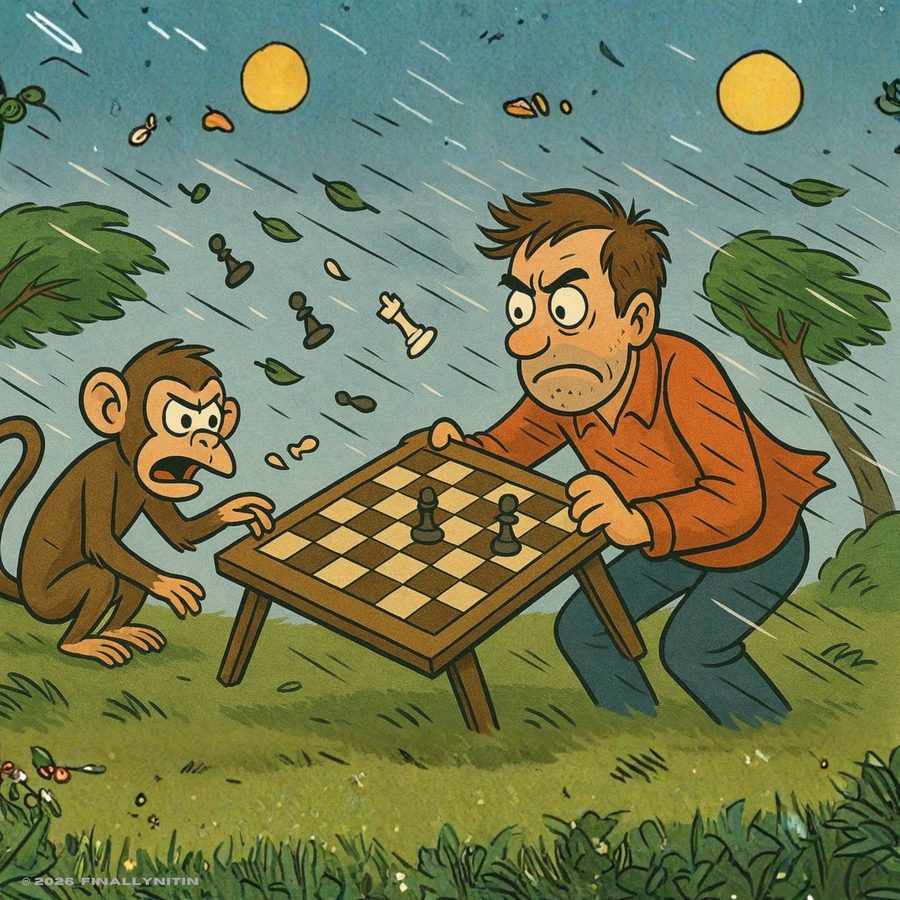
It's like playing chess against a monkey in a hurricane.
 Time & money
Some of my random thoughts about time & money:
- We value what we lack.
- Young people value money; as they get older, they start valuing time more.
- You know your bank balance, but not how much time you've got left.
- Time is a depreciating asset. Once this moment passes, it joins everything else that no longer exists.
- People spend time as carelessly as pocket change.
- You can create money from money, but not time from time.
- The purpose of money is to reclaim the time we have in our lives.
- The wealthy people buy time with money; the poor earn money with their time.
- Beyond a limit, happiness ceases to increase proportionately with the money that we have.
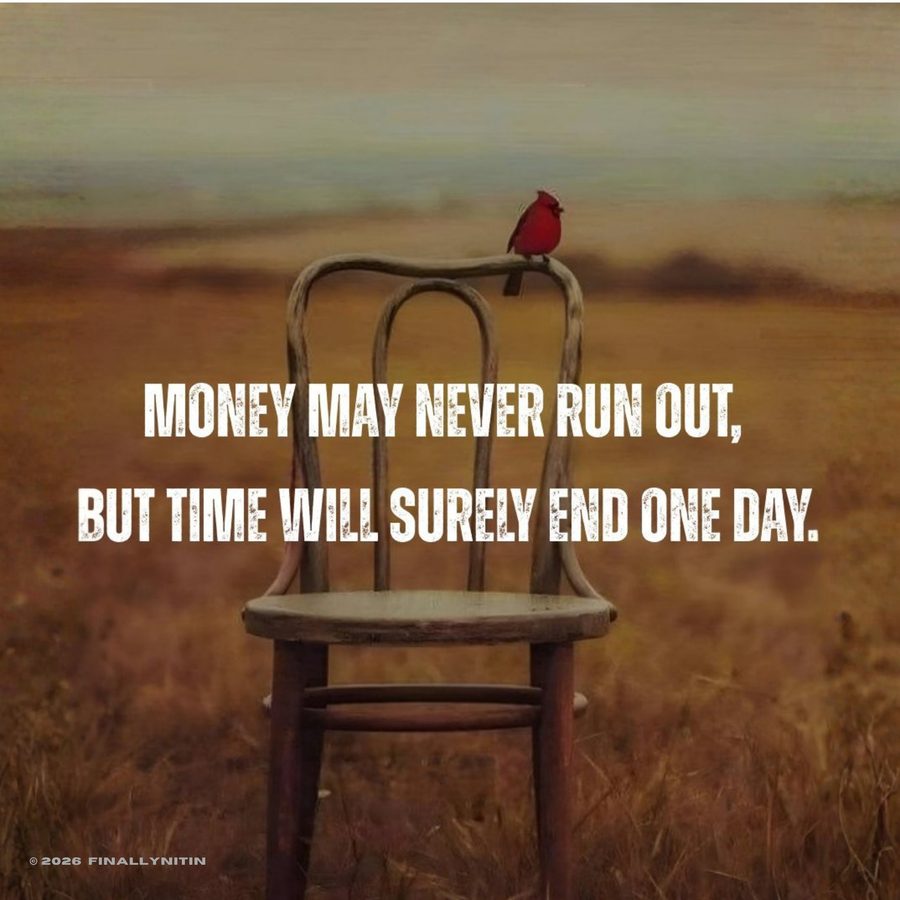
- "Paisa chahe khatam ho na ho, time ek din zaroor khatam ho jayega".
 Two types of swing traders
Swing traders can be broadly divided into two groups based on their approach to the markets.
- High-frequency Hunters. These traders will try to seize every opportunity and strive to maximize it. Traders who log 3R, 5R, 10R trades even in bad markets just by making use of even a 1- to 3-day big move in any stock belong to this group. They are adjusting their positions to grow their accounts quickly and not letting their capital sit idle.
- Low-frequency Snipers. These traders (like me) will sit out until the market conditions improve and let go of these 1- to 3-day or 3- to 5-day moves. This is because whenever I have tried high-frequency cash swing trading in the past, I've found myself letting go of all discipline & trading whatever comes to my sight. Besides this, I lack the time required to spot & execute such fast moves.
Neither approach holds a monopoly on profitability. The "correct" approach is the one that aligns strategy with temperament. It is less about the trades you take and more about knowing which trades you are built to take.
As for me, I will only trade clean setups in liquid names in a good market environment. I want them to give me sustainable moves that I can hold & trail, even if this means that I've to sit out for prolonged periods.
 Myths
Myths
Just as is the case with life, swing trading also has its fair share of myths that most of us have accepted without questioning them. Here are 10 harsh truths that I've learned the hard way:
1. Myth: "Don't trade intraday".
Truth: You cannot be a good swing trader if you cannot take intraday buy & sell decisions. Part-time traders who don't have the consistent luxury to take intraday decisions should accept a mediocre trading life.
2. Myth: "Never use margin".
Truth: You cannot generate super performance (200, 300% etc) in Indian bull markets without going on margin.
3. Myth: "Swing traders are purely technical & don't need to look at fundamentals".
Truth: You cannot be a legendary swing trader without having a knowledge of fundamentals, sectors & catalysts. I've very rarely encountered renowned swing traders who are purely technical & just don't know anything about fundamentals.
4. Myth: "All trading books need to be read, chewed & digested".
Truth: You don't need to read & re-read every word that's written in the trading books, & then read them again & again. If you cannot understand the first 4-5 books, you won't get it by reading another 40-50 books.
5. Myth: "Your broker's P&L statement is the only journal you need".
Truth: You cannot be a half-decent swing trader if you don't maintain a journal for the trades you took, & a database for trades that could have been.
6. Myth: "Stock selection is immaterial. Only trade management is what matters".
Truth: I say that well-selected is half-done, & the more you focus on selecting good names, the easier your trade management will be.
7. Myth: "A person selling courses is not profitable, because if he were profitable, why would he sell courses".
Truth: Why wouldn't anyone want a second source of income that's not lumpy like equity returns? Be positive, & just see what's in there for you. Have as many mentors as possible. Learn 1 or 2 or 3 things from them, add your personality traits to the mix, & you'll come out as a unique swing trader.
8. Myth: "Progressive exposure is a must".
Truth: This holds somewhat true only for traders who judge the market's environment by solely looking at their watchlist/portfolio response. Traders who have good market breadth tools & situational awareness hacks go with their full position size from the first trade itself.
9. Myth: "Trade only one setup".
Truth: Partially correct. The complete line is "trade one setup till you master it, & then add another & another & so on". Have as many weapons in your trading arsenal as possible.
10. Myth: "Greed & fear are the worst enemies of a trader".
Truth: Neither fear, not greed, actually lethargy is your biggest enemy. Most traders are non-profitable because, instead of putting in the hard work, they keep on looking for shortcuts & holy grails. Have a fire burning within you to be the very best, & the energy will itself find its way.
Please do correct me wherever your opinion differs.
 FOMO in trading
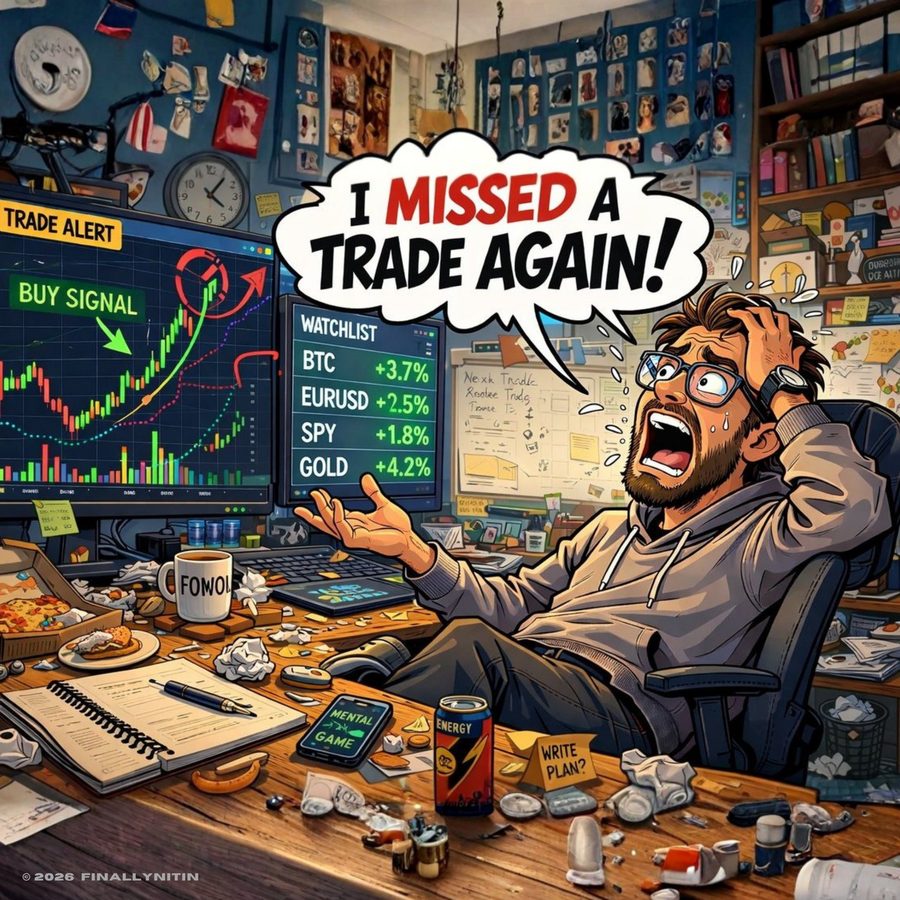
There are 3 reasons why you experience FOMO (fear of missing out) in trading.
1. You don't have a well-defined process.
Your process should answer 3 questions for you with utmost clarity:
- What is to be traded? (stock selection)
- When is it to be traded? (market conditions + low-risk entry point)
- How is it to be traded? (fast or slow trailing, selling in strength or weakness)
If you don't have a pre-defined answer to these questions, you don't have a process. It's going to be a long, hard journey for you from here.
2. You believe in your "let's-do-this-and-see-what-happens" approach more than the rules of the actual process themselves.
This is a problem of acting on idiosyncratic practices rather than a well-tested system. This is a reckless, trigger-happy, indisciplined approach, with no respect for a probabilistic mindset. You need to develop more trust in your system so that you no longer act as an emotional trader. You're halfway there.
3. You actually became lazy & missed out on a trade that you should have executed with your rules.
This is the only condition where you are genuinely allowed to feel FOMO. Happens sometimes. It's ok as long as you don't make it a habit.
 Universe
Imagine 2 guys. One is sitting on the shore of the ocean, & putting his hand in the water to see how many & what kind of fish are there. Another is doing scuba diving & is fully immersed in the ocean. Which one will be more in sync with the ocean?
There's no substitute for universe scanning, especially in bad markets. All the focus scans are good, if at all, for bull markets where you have to choose among many. So, I always prefer a universe scan.
 Two types of artists
Trading and life, in general, are very lonely journeys. Those who get to sit together, share, and laugh with friends and family are truly lucky. We are fortunate to have all of us together (in some way) on this journey.
Hum sab toh rangmanch ki kathputliyan hain; an easy word for this is being a performer, an artist. As creative humans, we are all artists.
And there are two types of artists.
- The first type is those who say that this is their first piece of art and that many more are yet to come, so there is plenty of scope for improvement.
- The second type is those who believe that this is their last piece of art, making this their only opportunity.
When I did my podcast with Ankur Patel, I did it as if it were my first and last podcast. When I wrote the Traderlion blog, I believed it would be my last guest post.
One should always strive to be the second type of artist. I try; sometimes I succeed, sometimes I don't. But I try.
So, what's the point here? The point is that time is limited; time is precious. It's slipping through our hands constantly.
So, seize the moment. Leave nothing for next time. Live while you can!
 Timeframe or Setup
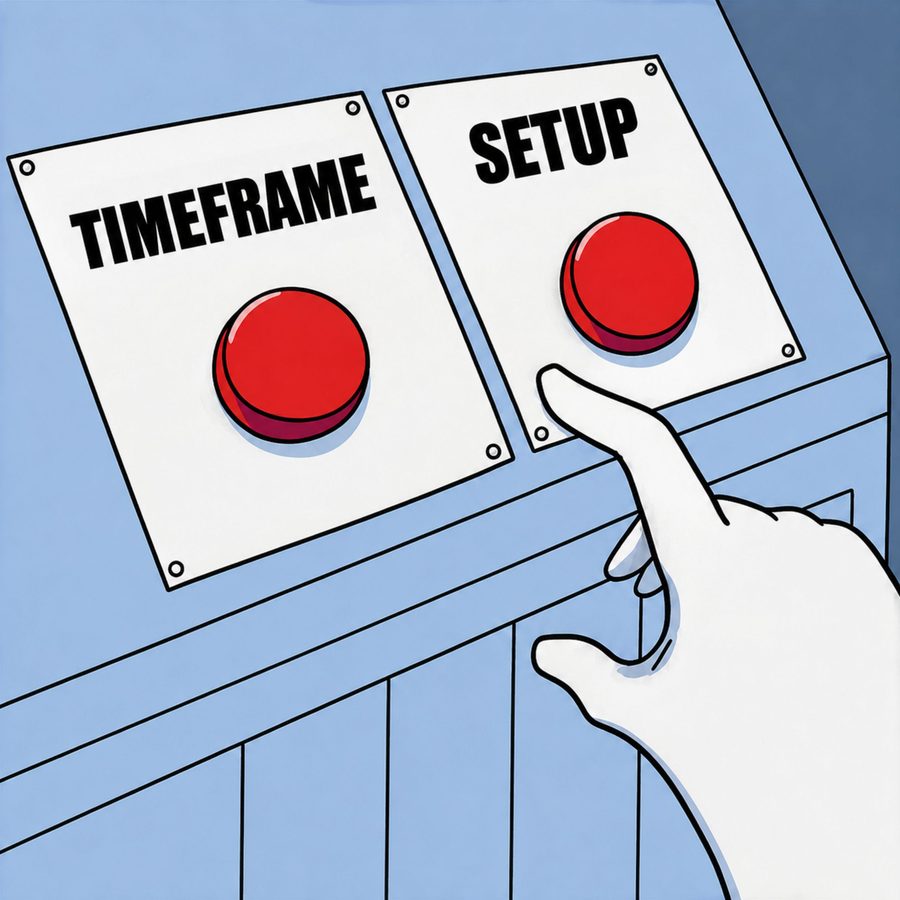
There are two types of traders.
The first kind of traders are the ones who never change their setups. For example, traders who look for stocks near 52-week highs. When they do not get their preferred setups in their usual timeframe, they look for other timeframes. The most common instance of this is a shift from a swing trading (daily timeframe) style to intraday trading (1, 3, 5 or 15 minute with no carry) in 'bad' markets.
The other type of traders, like me, are those who do not change their timeframes or do not have the luxury (time, skill, temperament) to do so, but are flexible in their choice of setups. Thus, in bear/transitional markets, they will engage in trades in low cheats or even in stocks that are below the 200-day moving average, basically whatever is working in those circumstances. But their trade will take place on the daily (or 75 minutes) timeframe.
Currently, the bulk of the breadth numbers is from stocks coming up from some long-ish term bottom. Meanwhile, the stocks close to their 52-week highs are doing nothing but theta decay. Therefore, I find this adjustment of setups more practical than switching to 1-minute charts.
In the current market, this is a hard choice to make, aside from sitting out, which, to be fair, is also a viable third option.
 The goal
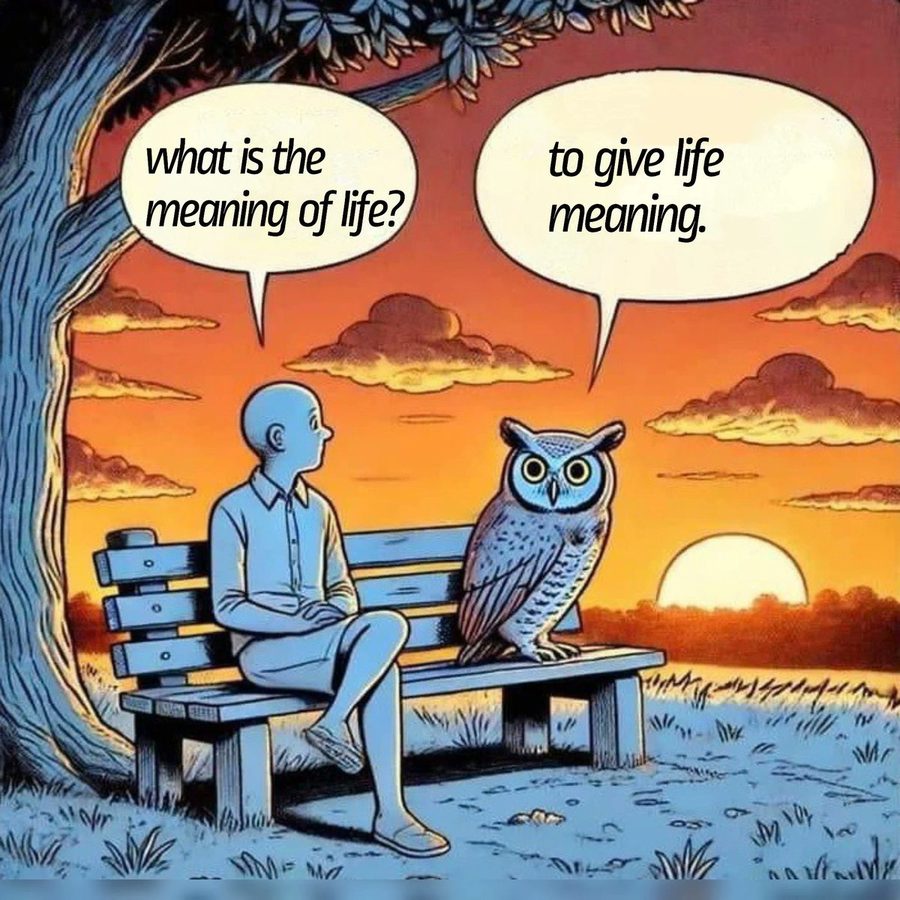
The ultimate goal in life (not 'of' life) is to live it so completely that when death stares you in the eye, you are ready to go; not scared, not dissatisfied, not tempted to live for another extra moment.
So, you are born empty, but you better die full of life.
 Price & value
भटकता रहा मैं उम्र भर तलाश में जिसकी,
वो मिला जो मुझे, में उसे पहचान ना पाया.
(I wandered all my life in search of the one,
whom when I met, I could not recognise.)
Price keeps wandering all its life in search of its fair value, & even when it gets there for a moment, doesn't realise that it has reached there.
Just like God can't be defined/accessed, humans seek avatars to try to reach God. Similarly, value can't be measured/quantified, so people seek price to judge value. In this process, price basks in glory sometimes, & gets battered sometimes.
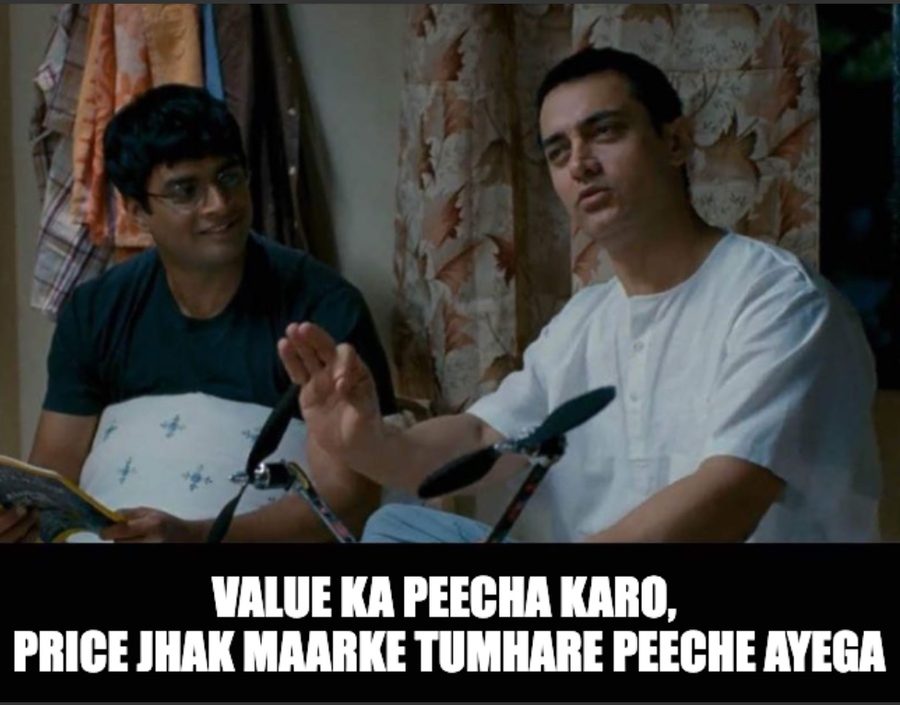
Don't run after price; seek value. Try to see how much the price has deviated away from its fair value.
Just because it's overbought doesn't mean that you sell it. It is overbought, so do not buy it here.
Just because it's oversold doesn't mean you should go ahead and buy. It is oversold, so don't sell here.
It's a young move. The price had been battered and is now moving up, trying to reach its fair value. Participate aggressively in this move.
It's an old move. The price has made three or four bases in this move. It seems to have ventured far away from its fair value, so don't participate aggressively in this move.
Price Ke Peeche Mat Bhaago, value Ka Peecha Karo, price Jhak Maarke Tumhare Peeche Ayega. Price is, after all, an inaccurate representation of its fair value, & that's what creates supply & demand dynamics.